
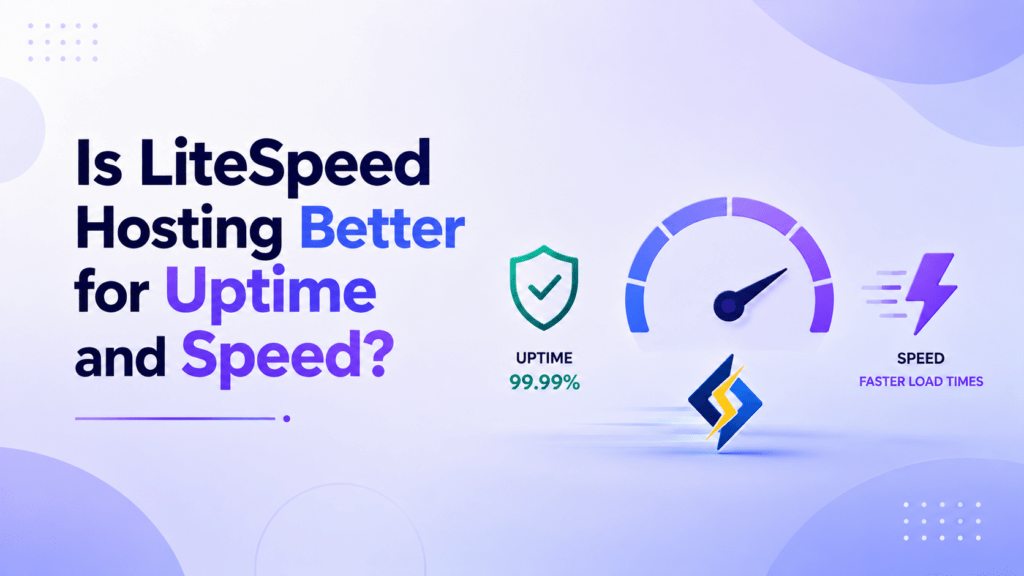
Yes, absolutely. For WordPress websites, LiteSpeed Hosting offers significantly better speed and uptime than traditional Apache or standard Nginx setups.
It delivers faster page loads through native, server-level caching (LSCache) and prevents crashes during heavy traffic spikes thanks to its highly efficient, event-driven architecture.
In short: it processes more requests using less server memory, keeping your site both lightning-fast and online when it matters most.
But to understand exactly why it outperforms the competition, we have to look beyond the marketing buzzwords and examine how it actually processes data.
When we talk about website performance, we usually focus on how fast a page loads for a single user. But there is a second, equally critical metric: how well the server handles thousands of users simultaneously without crashing. This is where your web server software makes all the difference.
For years, Apache and Nginx have been the industry standards. But over the last decade, LiteSpeed has quietly taken over the premium hosting space. (Curious about the differences?
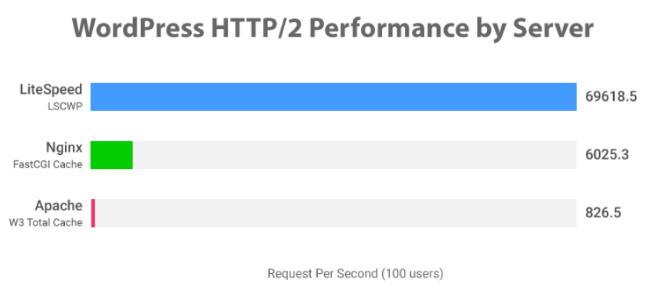
(Check out the complete Blog here.)
Let’s break down the technical reality of LiteSpeed hosting and why it might be the best upgrade for your site’s reliability.
What Exactly is LiteSpeed? (Without the Jargon)
LiteSpeed Server vs. LiteSpeed Hosting: What’s the Difference?
Before we dive into the speed metrics, it’s important to understand a common misconception. LiteSpeed is primarily a web server software (LiteSpeed Web Server).
However, simply having this software installed on a poorly configured server won’t give you the results you want.
LiteSpeed Hosting is different. When a premium provider offers LiteSpeed Hosting, they aren’t just installing the software. They are providing a fully optimized hosting environment where:
- The server’s RAM and CPU are specifically tuned for LiteSpeed’s event-driven architecture.
- Native LiteSpeed Cache (LSCache) is pre-configured at the server level.
- PHP workers and database connections are optimized to work seamlessly with LiteSpeed.
In short: LiteSpeed is the engine, but LiteSpeed Hosting is the fully tuned, high-performance vehicle built around that engine. And that makes a massive difference in real-world uptime and speed.
The Speed Factor: Why LiteSpeed Feels Instant
When you move to a LiteSpeed server, the first thing you notice is the raw speed. But it’s not just about the server software; it’s about how it interacts with WordPress. Here is why LiteSpeed delivers faster page loads:
1. Native LiteSpeed Cache (LSCache)
Most hosting providers use third-party caching plugins like W3 Total Cache or WP Rocket. These are good, but they have to work around the server’s limitations. LiteSpeed comes with its own native caching module, LSCache, built directly into the server. Because the cache lives at the server level, it bypasses PHP and database queries entirely for logged-out users. The result? Pages are served in milliseconds.
2. Faster Time to First Byte (TTFB)
TTFB is the time it takes for the server to receive a request and send the first byte of data back to the browser. Because LiteSpeed processes connections more efficiently and serves cached content directly from memory, your TTFB drops significantly. A lower TTFB means the browser can start rendering the page much sooner.
3. Advanced Protocol Support
LiteSpeed supports the latest web protocols, including HTTP/3 and QUIC, out of the box. These protocols reduce latency, especially for mobile users on unstable networks, making your site feel noticeably snappier.
The Uptime Factor: How LiteSpeed Prevents Crashes
This is the most critical part for anyone using a monitoring tool like OhDear. Speed is great, but if your site goes down, speed doesn’t matter. Here is how LiteSpeed directly protects your uptime.
1. Surviving Traffic Spikes
Remember the “bank teller” analogy? Because LiteSpeed uses an event-driven model, it can handle a massive number of concurrent connections using a fraction of the RAM that Apache would require. When a traffic spike hits, an Apache server might hit its memory limit and crash.
A LiteSpeed server will simply queue the extra requests efficiently, keeping the site online and responsive for everyone.
2. Graceful Degradation
No server is invincible. If traffic exceeds even LiteSpeed’s massive capacity, it doesn’t just hard-crash. It uses a feature called “graceful degradation.” It will intelligently prioritize critical requests and serve simplified versions of pages if necessary, ensuring the core site remains accessible rather than throwing a fatal 500 or 503 error.
3. Lower Server Load Means Fewer Reboots
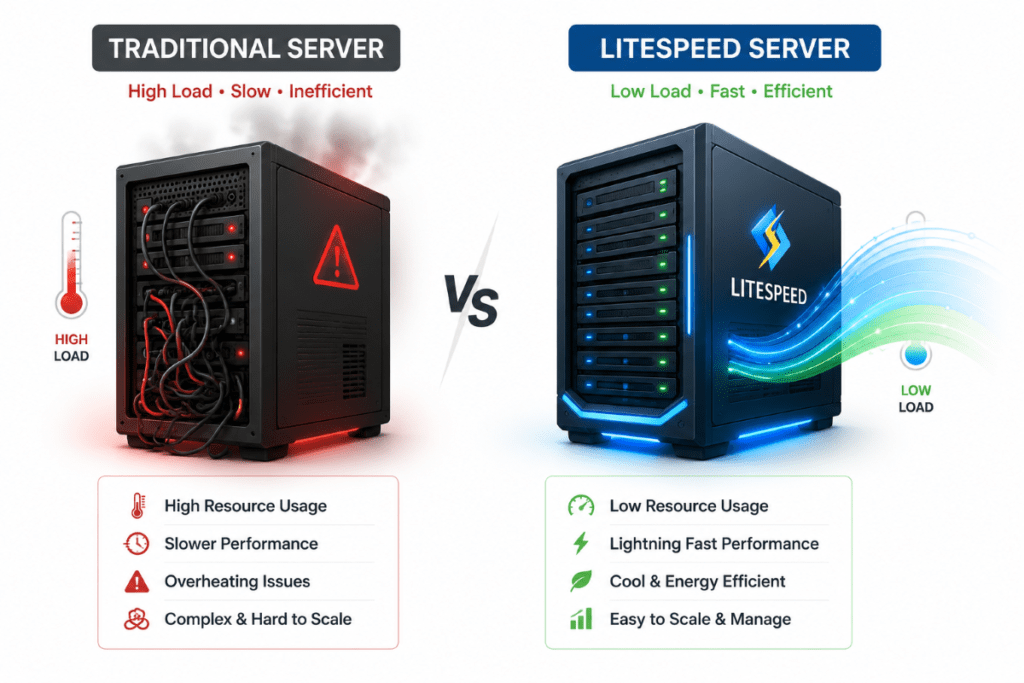
High server load leads to overheating, process failures, and forced reboots by the hosting provider’s automated systems. Because LiteSpeed is highly optimized and uses fewer resources to serve the same amount of traffic, your overall server load remains low. A stable, cool-running server is a server that stays online.
LiteSpeed vs. Apache vs. Nginx: The Quick Comparison
To put things into perspective, here is how the three major web servers stack up against each other for WordPress hosting:
| Feature | Apache | Nginx | LiteSpeed |
| Architecture | Process-driven | Event-driven | Event-driven |
| Handling Concurrency | Struggles with high traffic | Excellent | Excellent (Best for shared) |
| Caching | Requires external plugins | Requires reverse proxy setup | Native, built-in (LSCache) |
| .htaccess Support | Native | No (Requires conversion) | Native (Drop-in replacement) |
| WordPress Optimization | Average | Good (with complex config) | Best (Purpose-built) |
| Uptime Under Load | Prone to 503 errors | Very stable | Highly stable |
Note: While Nginx is incredibly fast, it doesn’t natively support .htaccess files, which can make migrating WordPress sites or using certain plugins tricky. LiteSpeed offers the raw speed of Nginx with the compatibility of Apache.
Why This Matters for Uptime Monitoring (The OhDear Connection)
Here at CheckWP.io, we always emphasise one golden rule: you can’t fix a website problem you don’t know about. A reliable uptime monitor is your essential early warning system, but it only tells you when your site is down; it doesn’t prevent the downtime itself.
This is where your hosting infrastructure and your monitoring tool work together perfectly:
- LiteSpeed prevents the downtime: By handling traffic spikes efficiently and keeping server load low, LiteSpeed ensures those 503 and 500 errors rarely happen in the first place.
- Your monitoring tool verifies the uptime: Even with the best server, things like plugin conflicts, expired SSL certificates, or DNS issues can take a site offline. A dedicated uptime monitor checks your site every minute, scans for broken links, and alerts you instantly if something goes wrong.
Using LiteSpeed hosting minimizes the chances of a server-level crash, while an active monitor ensures you are instantly notified if an application-level issue occurs. It is the ultimate safety net for your business.
Who Needs LiteSpeed the Most?
While every website benefits from a faster, more stable server, LiteSpeed is practically mandatory for the following types of sites:
- WooCommerce Stores: E-commerce sites require heavy database queries. LSCache can intelligently cache cart pages and user sessions without breaking the checkout process, keeping the store fast and online during sales.
- High-Traffic Blogs & Publishers: If you rely on ad revenue or affiliate links, a 10-minute downtime during a traffic spike can cost you thousands of dollars. LiteSpeed’s concurrency handling protects your revenue.
- Membership & LMS Sites: Sites with logged-in users (like LearnDash or MemberPress) can’t rely on standard page caching. LiteSpeed’s advanced object caching (Redis integration) speeds up database queries, keeping the site responsive even when hundreds of students are taking a quiz simultaneously.
Final Verdict: Is It Worth the Upgrade?
If you are currently on a standard Apache server and experiencing slow load times or occasional downtime during traffic spikes, moving to LiteSpeed is not just a minor tweak-it is a fundamental upgrade to your site’s foundation.
It gives you the raw speed of Nginx, the compatibility of Apache, and a native caching solution that simply outperforms third-party plugins. More importantly, its event-driven architecture provides a level of uptime stability that traditional servers struggle to match.
You can spend hours tweaking your code and optimizing your images. But at the end of the day, your website is only as fast and as reliable as the server it lives on.
Ready to check your site’s health?
Make sure your hosting is built for performance, and pair it with a robust monitoring tool like OhDear to ensure you never miss a second of downtime.